

Insights
An Interview with Gizem Taşkesen Öztürk on Medical Appointment Management: Shaping the Future of e-Appointment Systems
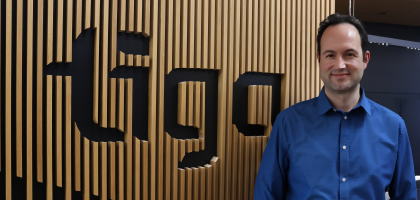
We interviewed Gizem Taşkesen Öztürk, our Product Owner, to underscore the transformative impact of national e-appointment systems on healthcare accessibility and operational efficiency. Öztürk highlighted the benefits of these systems as well as the limitations of traditional healthcare scheduling methods. She emphasized that Tiga Healthcare Technologies’ e-Appointment solution maximizes patient satisfaction while minimizing inefficiencies within healthcare appointment management.

Here’s the interview:
1. To begin, could you explain what an e-appointment system is and how it differs from traditional healthcare appointment scheduling methods?
The national e-appointment system is a centralized digital platform that makes all hospitals, clinics, and medical specialties across the country accessible in one place. This system allows patients to see available appointment times for all doctors and specialties nationwide, rather than being limited to the schedule of a single hospital. If needed, they can easily book an appointment at another hospital or city.
Unlike traditional appointment methods, the national e-appointment system is centralized and transparent, enabling patients to view all options at once and choose the most suitable time. Additionally, appointments can be booked, canceled, or rescheduled online, saving time and allowing for a more balanced distribution of healthcare services across the country. As a result, hospital overcrowding is reduced, and patients can access healthcare more quickly and conveniently.
2. What are the main challenges in patient appointment management today? How can digital solutions like e-appointment systems address these issues?
Today, patient appointment management faces several challenges: difficulty in finding available slots due to hospital overcrowding, separate systems for each hospital limiting visibility, time lost through phone or in-person booking, complicated rescheduling or cancellations, and uneven distribution of patients across facilities.
Digital solutions like national e-appointment systems address these issues by providing a centralized, transparent platform where patients can easily find and book available appointments, manage cancellations or changes online, and save time. Moreover, these solutions help balance patient load across hospitals, making the process more efficient for both patients and healthcare providers.
3. Which specific needs does Tiga Healthcare Technologies’ e-Appointment System aim to fulfill?
Tiga’s e-Appointment System enables patients to book and manage all types of appointments in one centralized platform. Users can easily create, cancel, or reschedule appointments, eliminating the complexity of traditional phone or in-person scheduling. The system also allows patients to view their previous appointments and track their healthcare history while offering recommended slots to help them find the most convenient and timely options.
With AI-powered algorithms, the system suggests the most suitable doctors or available appointments based on a patient’s history and needs, helping them save time and improve the likelihood of meeting the right specialist. Furthermore, it supports telehealth services; the system allows patients, especially those in remote areas or with mobility challenges, to consult with doctors online. This feature increases accessibility and reduces the need for in-person visits.
Accessible via computer and smartphone, the system is designed to be user-friendly and inclusive for all ages and tech levels. By integrating appointment management, intelligent recommendations, and patient history tracking, Tiga’s e-Appointment provides a comprehensive and efficient solution for both patients and healthcare providers.
4. What efforts or strategies are implemented to improve user experience within Tiga’s e-Appointment?
The system improves user experience through 24/7 online access, AI-powered recommendations, telehealth options, multi-channel support (web and mobile), and easy management of past and upcoming appointments.
5. Can you share any example where this system has significantly increased patient satisfaction or operational efficiency for healthcare providers?
Previously, hospitals relied on call centers for all appointments. Patients often faced long wait times on the phone, double bookings occurred, and rescheduling or cancellations were cumbersome. Shortly, traditional call center systems within hospitals were lowering patient satisfaction and operational efficiency.
Through an online e-appointment system, patients can book 24/7, view their past appointments, and easily choose recommended slots. Cancellations and changes are updated instantly, allowing empty slots to be reused.
As a result, waiting times decrease, no-show rates drop, and the staff becomes more efficient. Health managers can also use system data to better plan patient flow and resource allocation, improving both patient satisfaction and operational efficiency.
6. What do you think about the potential impact of emerging technologies like AI on e-appointment systems and medical appointment management?
Emerging technologies like AI have the potential to transform e-appointment systems and overall medical appointment management. With AI, systems can use chatbots to answer routine questions, guide patients step by step, and even help those who are not familiar with web or mobile applications. This makes booking appointments much easier for everyone, including elderly patients and those with limited technical skills.
AI can also analyze patient data and past appointment patterns to suggest the most appropriate time slots, recommend physicians, and reduce scheduling conflicts. Moreover, predictive algorithms can help hospitals anticipate patient flow, optimize staff schedules, and minimize wait times. Overall, AI not only enhances patient convenience and accessibility but also improves operational efficiency for healthcare providers, making the system smarter, faster, and more user-friendly.

Key Points of the Interview
- Centralized and Digitalized Appointment Management: A national e-appointment system offers a more transparent and accessible alternative to traditional methods. By bringing all healthcare facilities into a single platform, this solution simplifies finding, changing, and canceling appointments.
- Enhanced Patient Experience and Access to Healthcare: The e-appointment system reduces difficulties in healthcare appointment management and balances hospital workload. Patients and healthcare providers save time via this innovative system, which improves patient satisfaction and makes healthcare more accessible.
- Efficiency Through AI and Smart Technologies: E-appointment systems utilize AI and other emerging technologies to suggest suitable clinicians and available time slots to patients. Furthermore, these systems are part of advanced digital healthcare transformation via chatbot-assisted guidance and patient flow prediction.
This insightful interview with Gizem Taşkesen Öztürk highlights the significance of national e-appointment systems in enhancing healthcare access. Tiga Healthcare Technologies’ e-Appointment solution makes medical appointment management more efficient and patient-centric. Öztürk’s explanations demonstrate that digital technologies like our e-Appointment open doors to greater access and convenience for patients and healthcare providers.
Let’s shape the future together, as always!